|
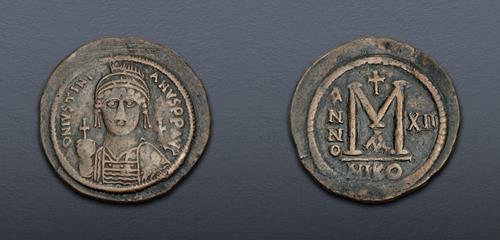
Justinian I. 527-565. Æ Follis (43.5mm, 22.96 g, 7h). Nicomedia mint, 1st officina. Dated RY 12 (AD 538/9). VF.
Keystone 17 – The W. Toliver Besson Collection
Lot: 314. Estimated: $ 100
Byzantine, Bronze
Sold For $ 550. This amount does not include the buyer’s fee.
Go to Live
|
|
Justinian I. 527-565. Æ Follis (43.5mm, 22.96 g, 7h). Nicomedia mint, 1st officina. Dated RY 12 (AD 538/9). Helmeted and cuirassed bust facing, holding globus cruciger and shield; cross to right / Large M, cross above; A/N/N/O - XII (date) across field; A//NIKO. DOC 115a; MIBE 113a; SB 201. Dark brown patina, somewhat wavy flan, some scratches. VF.
From the W. Toliver Besson Collection, purchased from Palmyra Heritage, 2 February 2012.
In AD 538, the Emperor Justinian initiated a coinage reform that saw the bronze follis, valued at 40 nummi, increased in diameter and weight by up to 35%. Smaller denominations were likewise resized in respect to their relation to the follis. The formally profile portrait of the emperor now became fully frontal (see previous note on a gold solidus of Justinian), and the reverse now carried the regnal year in Roman numerals (ANNO XII). The reasons for the reform are unclear, but it came at the peak of East Roman expansion that had, for the time being, filled the privy purse with gold looted from the Vandal Kingdom’s treasury in Carthage. Justinian may have believed the relative values of bronze and gold needed to be rebalanced. Also, the large and impressive bronze coins seemed part and parcel of his campaign to restore Roman greatness. Military reversals, along with a terrible plague and its associated economic upheaval, soon resulted in a reduction in weight back to nearly the levels set by Anastasius, although the changes in iconography and the addition of the regnal date. proved enduring.
Closing Date and Time: 22 July 2026 at 11:44:20 ET.
Winning bids are subject to a 22.5% buyer's fee for bids placed on this website, 25% for all others.
|
