|
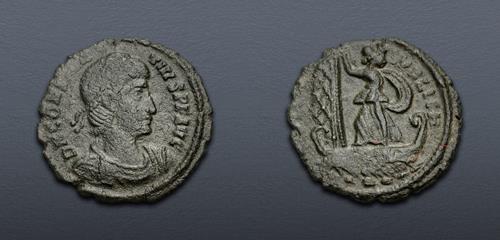
Constantius II. AD 337-361. Æ (15.5mm, 1.72 g, 6h). Festival of Isis Issue. Rome mint. Struck 26 September AD 352-6 November 355. VF.
CNG Feature Auction 133
Lot: 618. Estimated: $ 500
Roman Imperial, Bronze
Sold For $ 1 000. This amount does not include the buyer’s fee.
Go to Live
|
|
Constantius II. AD 337-361. Æ (15.5mm, 1.72 g, 6h). Festival of Isis Issue. Rome mint. Struck 26 September AD 352-6 November 355. Pearl-diademed, draped, and cuirassed bust right / Isis Pharia standing left on galley, head right, holding billowing sail with both hands. RIC VIII 479; Bricault & Mondello (forthcoming) E75.3 (this token); Alföldi, Festival 49 and pl. II, 2 (same obv. die); Vagi 3443; Tesorillo 14/11, 374 (this token). Brown patina, some roughness. VF.
From the Dr. Thomas E. Beniak Collection. Ex Phil Peck (“Morris”) Collection (Heritage 271933, 18 August 2019), lot 35459.
The Ptolemaic cult of Serapis and Isis enjoyed great popularity throughout Hellenistic and Roman times, and indeed the Romans, like the Greeks and Persians before them, were fascinated by the culture and monuments of ancient Egypt. The Ptolemies and the Roman emperors were not content with just being the foreign rulers of Egypt, but wanted to be viewed as legitimate successors of the Pharaohs. To this end, they portrayed themselves as Pharaohs to the native population and even promoted the import of certain aspects of Egyptian culture and religion to their own native lands. The Egyptian concept of the Pharaoh as a god was appealing to the Roman emperors (the aging Julius Caesar was especially taken with this concept during his romance with Cleopatra). The Isis festival was a major celebration in Rome in the 3rd and 4th centuries AD, heralding the arrival of the ship of Isis (navigium Isidis) from Alexandria on 5 March. Besides Isis and Horus, other members of the Egyptian pantheon appear such as Serapis, Anubis, Harpocrates, and Nilus. Tokens with imperial busts were struck at Rome to mark the arrival of the ship, and the tradition continued through the 4th century; the latest imperial bust to appear is that of Valentinian II. Alföldi proposed that in the Middle Ages the festival associated with the Isis ship (also known as carrus navalis) became the carro navale, and the possible origin of the word carnival, though that etymology has been disputed.
The final winners of all CNG Feature Auction 133 lots will be determined at the live online sale that will be held on 15-16 September 2026.
CNG Feature Auction 133 – Session Three – Lot 595-896 will be held Wednesday morning, 16 September 2026 beginning at 9:00 AM ET.
Winning bids are subject to a 22.5% buyer's fee for bids placed on this website and 25% for all others.
We recognize that our users may have various Internet Browsers and Operating Systems. We like our visitors to have the best possible experience when using our bidding platform. However, we do recognize that it is impossible to develop applications that work identically, efficiently and effectively on all web browsers. The CNG bidding platform supports the latest stable major version and stable previous version of Chrome and Firefox.
|
